

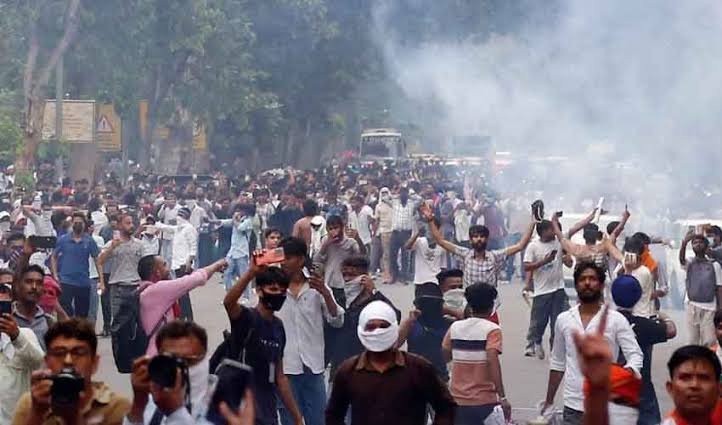
New Delhi: India’s youth-led Cockroach Janta Party (CJP) continued its nationwide protest campaign on Tuesday, with thousands of demonstrators returning to the streets of New Delhi despite a police crackdown a day earlier. The movement, which began as a campaign for education reforms, is rapidly evolving into a broader expression of youth frustration over unemployment, corruption, and governance.
Large crowds gathered near Delhi’s Jantar Mantar, the centre of the protests, demanding the resignation of Education Minister Dharmendra Pradhan and comprehensive reforms to India’s examination and recruitment systems. Protesters accuse the government of failing to curb repeated examination paper leaks and alleged corruption that they say has jeopardized the future of millions of young people.
Monday’s demonstrations, attended by more than 50,000 people according to organizers, turned violent after police blocked a planned march toward Parliament. Security forces erected barricades, restricted access to key areas, and used tear gas and batons to disperse the crowd after clashes broke out. Police said they acted to maintain law and order, while protest organizers and witnesses alleged that excessive force was used against peaceful demonstrators.
Reports indicate that dozens of people were injured during the confrontation, with at least one protester reportedly in critical condition. Despite the crackdown, demonstrators returned in large numbers on Tuesday, many saying they were determined to continue protesting until their demands were addressed.
“We are not afraid. We will stay here until the government listens to us,” several protesters told local and international media, reflecting the growing determination among participants.
The opposition Congress Party also backed the protests, criticizing the government’s handling of the demonstrations and accusing it of failing India’s youth. The ruling Bharatiya Janata Party (BJP), however, has defended the police response, saying security measures were necessary to prevent disorder.
CJP leaders say the movement now represents more than demands for education reform. They argue that it has become a platform for millions of young Indians seeking transparency, accountability, employment opportunities, and better governance.
Although senior government officials have held discussions with representatives of the movement and Prime Minister Narendra Modi has previously pledged action against examination irregularities, protesters insist that meaningful reforms—not promises—are needed. The movement’s leaders have vowed to continue peaceful demonstrations until concrete steps are taken to address their concerns.












Leave a Reply