

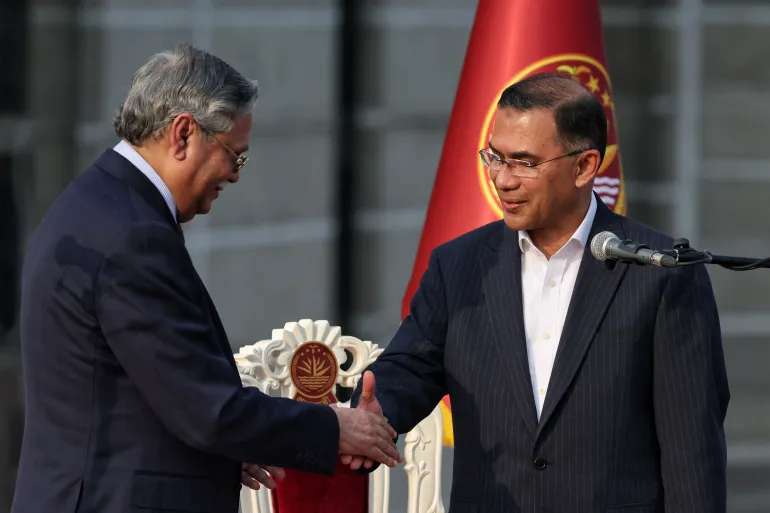
DHAKA, February 17, 2026: Tarique Rahman was sworn in as Bangladesh’s new prime minister on Tuesday, days after his party secured a sweeping victory in the country’s first general election since the 2024 student-led uprising that removed former leader Sheikh Hasina from office.
Rahman took the oath at a televised ceremony held at the South Plaza of the parliament complex in Dhaka. The oath was administered by President Mohammed Shahabuddin.
“I will faithfully discharge the duties of the office of prime minister in accordance with the law,” Rahman said during the ceremony.
Earlier in the day, newly elected lawmakers were sworn in inside the parliament building by Chief Election Commissioner AMM Nasir Uddin, pledging allegiance to the state.
Rahman’s Bangladesh Nationalist Party (BNP) secured more than a two-thirds majority in the 350-seat parliament. Of the 299 constituencies where voting was held, the BNP and its allies won at least 212 seats, giving them a commanding majority. The Jamaat-e-Islami and its partners captured 77 seats. The Awami League, previously led by Hasina, was barred from contesting the election.
Foreign dignitaries attended the inauguration, including representatives from neighboring countries. Cabinet members were also scheduled to take their oaths later in the day.
Despite tight security arrangements, hundreds gathered outside the parliament grounds to witness the historic transition. Observers say the election outcome reflects strong public demand for political change, particularly among younger voters who played a central role in last year’s uprising.
Rahman succeeds an interim administration that governed for 18 months following Hasina’s removal.
A key priority for the new government will be implementing the July National Charter, a reform package endorsed by more than 60 percent of voters in a referendum held alongside the general election. The charter proposes wide-ranging institutional changes, including the introduction of term limits, the creation of a bicameral legislature, and restrictions on unilateral constitutional amendments by the ruling party.
Political analysts say expectations are high, especially among the youth, who are seeking greater representation and structural reforms in Bangladesh’s governance system.












Leave a Reply