

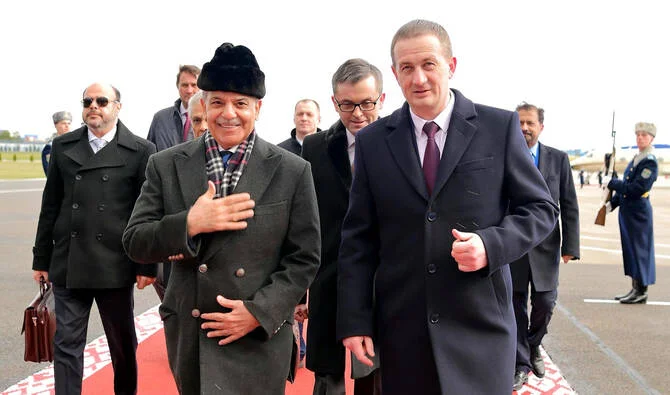
Prime Minister Shehbaz Sharif arrived in Vienna on February 15 for a two-day official visit at the invitation of Austrian Federal Chancellor Christian Stocker. The trip marks the first visit by a Pakistani prime minister to Austria in more than three decades, the last being Nawaz Sharif in 1992. It also coincides with the 70th anniversary of diplomatic relations between Pakistan and Austria.
Upon landing at Vienna International Airport, the prime minister and his delegation were received with official honours, including a ceremonial salute by the Austrian armed forces. His delegation includes Deputy Prime Minister and Foreign Minister Senator Muhammad Ishaq Dar, Information Minister Attaullah Tarar, Special Assistant Syed Tariq Fatemi, and Foreign Secretary Ambassador Amna Baloch. A formal guard of honour at the Federal Chancellery highlighted the diplomatic importance attached to the visit.
During their meeting at the Federal Chancellery, Prime Minister Shehbaz and Chancellor Stocker reviewed the entire spectrum of bilateral relations. Discussions focused on strengthening political dialogue and expanding cooperation, particularly in trade, investment, and economic collaboration. Pakistan’s Foreign Office stated that both sides agreed to inject new momentum into ties and move towards more result-oriented engagement.
A key feature of the visit was the Pakistan-Austria Business Forum, hosted by the Austrian Economic Chamber (WKO). The prime minister co-chaired the session alongside Chancellor Stocker, engaging with leading business representatives from both countries. Talks centred on increasing trade volumes, attracting Austrian investment, and promoting collaboration in renewable energy, technology, manufacturing, and industrial development.
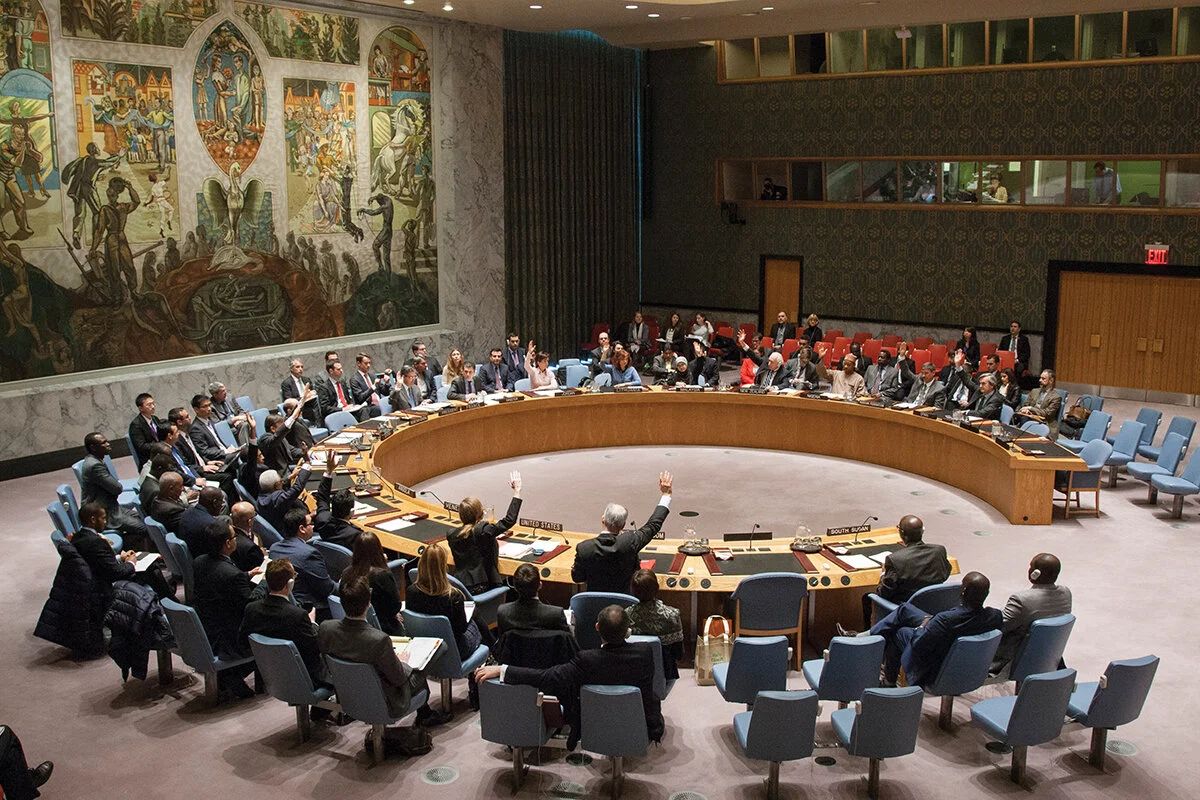
The prime minister also participated in a United Nations event in Vienna titled “Sustainable Development: The Path to Global Peace and Prosperity.” In his remarks, he reaffirmed Pakistan’s commitment to sustainable growth, multilateral cooperation, and global peace efforts. Vienna, as a hub for several major UN bodies, offered Pakistan an opportunity to project its policy priorities on international platforms.
On the sidelines, the prime minister met with the Director General of the International Atomic Energy Agency to discuss cooperation in peaceful nuclear energy, safety standards, and scientific collaboration. The engagement underscored Islamabad’s interest in expanding technical cooperation in areas aligned with development goals.
The visit is viewed as a strategic step in strengthening Pakistan’s outreach to Central Europe. Austria’s neutral diplomatic standing and its role as host to major UN institutions make it a significant partner for advancing both bilateral and multilateral objectives.
Officials expect the visit to pave the way for enhanced trade, structured economic dialogue, and possible joint working groups to sustain momentum. Historically, trade between the two countries has remained modest, but there is potential growth in machinery, textiles, industrial goods, and technology services.
Observers note that continued follow-up through institutional mechanisms and sector-specific agreements will be crucial in translating diplomatic goodwill into tangible economic outcomes. By combining bilateral engagement with multilateral diplomacy, Pakistan aims to broaden its European partnerships and strengthen its international profile.
Overall, the Vienna visit reflects Islamabad’s effort to revitalise ties with Europe through economic diplomacy and multilateral cooperation, positioning Austria as an important gateway for future strategic engagement.







Leave a Reply