

By Inayatullah Rustamani
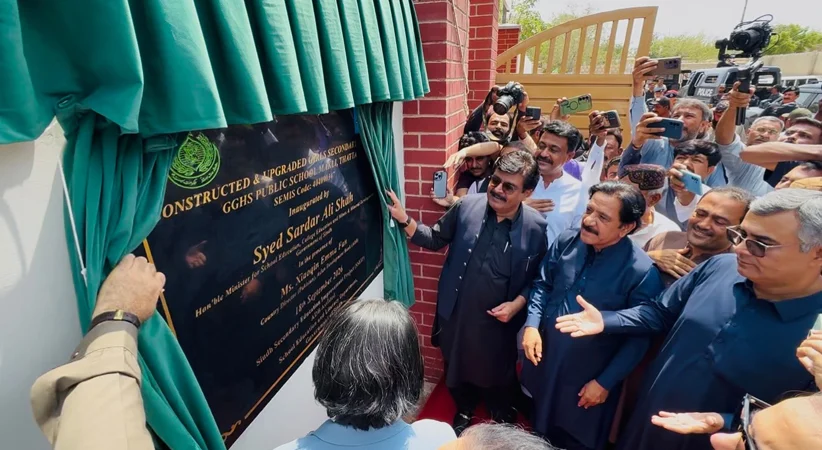
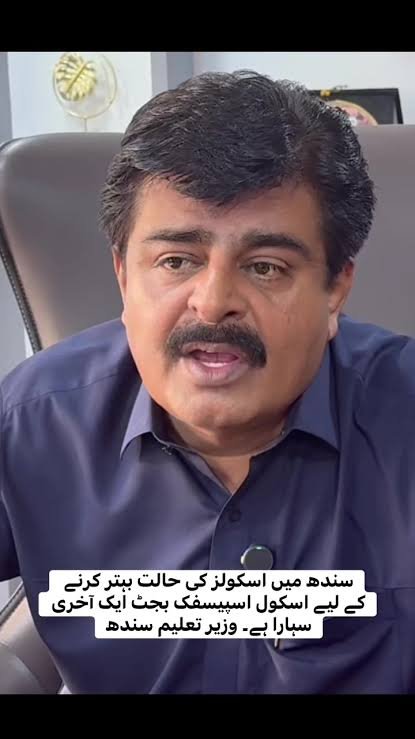
This is heartening to learn that Sindh is the first province to approve the transgender education policy . As under the leadership of Education Minister Syed Sardar Ali Shah, the Sindh government has taken a historic and meaningful initiative towards giving a historically marginalized community the opportunity to learn, earn and live with dignity.
For a transgender student, the dream of entering a university can be much more difficult than passing an examination or securing admission. It can mean overcoming years of social rejection, financial hardship, discrimination and the absence of a supportive environment. While many young people look forward to choosing their favourite subjects, building careers and planning their futures, transgender students often have to struggle simply to remain part of the educational system.
The Sindh government’s decision to provide higher education scholarships to transgender students under the Sindh Education Endowment Fund (SEEF) deserves particular recognition. The initiative is more than a financial support programme; it is an opportunity to restore confidence, open doors to professional careers and assure a marginalised community that it, too, has a place in the province’s educational future. The decision reflects an encouraging commitment by Sindh Education Minister Syed Sardar Ali Shah to make education more inclusive and accessible. By recognizing the educational needs of transgender students, the provincial government has taken a step towards addressing inequalities that have remained largely overlooked for generations.
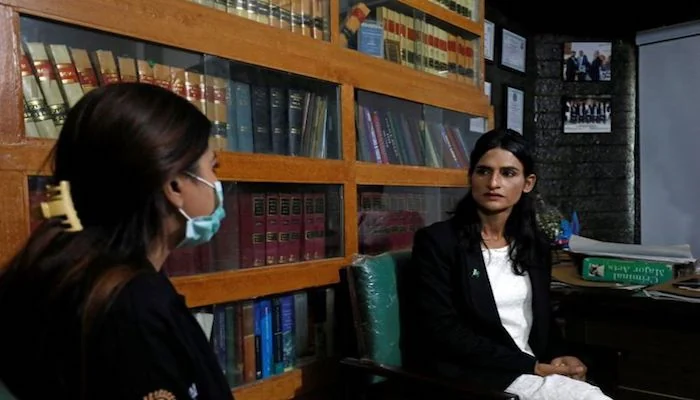
The development followed a meeting between Sardar Ali Shah and a delegation representing the transgender community on Thursday. The delegation included Shahzadi Rai, focal person for the Transgender Community in Sindh and Karachi Metropolitan Corporation councillor; Zahrish Khanzadi, operations, human resources and policy manager of the Gender Interactive Alliance; and Kami Chaudhry, executive director of Sarbang Society. During the meeting, the education minister assured the delegation that special approval would be sought at an SEEF board meeting to facilitate higher education scholarships for transgender students. His assurance offers hope to young people who have the ability and ambition to pursue university education but often lack the financial resources and institutional support to do so.
The importance of this decision becomes clearer when one considers the circumstances of the transgender community in Pakistan. According to the 2023 Population and Housing Census, 4,222 transgender people were officially enumerated in Sindh, while the national figure stood at 20,331. However, community organisations have repeatedly raised concerns that the actual population may be considerably higher because many individuals remain reluctant to disclose their identities during official surveys due to social stigma and fear of discrimination. Behind these statistics are human lives, individual ambitions and stories of struggle. Many transgender people face rejection within their families, bullying at schools, humiliation in public spaces and discrimination when seeking employment. For some, the journey towards education becomes difficult at an early age, while others are forced to abandon their studies because of financial difficulties or an unfriendly learning environment.
The educational disadvantage is reflected in the 2023 census data, which recorded a literacy rate of 37.45 per cent among transgender people in Sindh and an out-of-school rate of 80.46 per cent among transgender children aged five to 16. These figures illustrate the scale of the challenge and the need for policies that go beyond general educational provisions. For a transgender student who has managed to complete school despite these difficulties, financial assistance at the university level could be life-changing. A scholarship may enable someone to study law, medicine, education, information technology, business administration or social sciences. It could help a young person become a teacher, doctor, lawyer, researcher, entrepreneur or public servant instead of being denied opportunities because of social prejudice.
More importantly, higher education can provide the community with a pathway towards financial independence and greater participation in society. When transgender students acquire professional qualifications and enter respectable careers, they challenge deeply rooted stereotypes through their achievements. Their success can also inspire younger members of the community to continue their education and encourage families to support their children’s ambitions. This is why the proposed SEEF scholarships should be seen as an investment in human potential rather than simply another government welfare measure. The ability to learn, develop skills and pursue a profession is not restricted to any particular gender or social group. Every individual deserves an opportunity to discover and realise their abilities.
Sardar Ali Shah deserves appreciation for recognising this reality and responding positively to the concerns raised by transgender representatives. His willingness to seek special approval through the SEEF board demonstrates an encouraging approach to policymaking: listening to communities, understanding their difficulties and exploring institutional solutions.
Sindh’s education agenda must be measured not only by the number of schools constructed, teachers recruited or institutions upgraded, but also by how effectively educational opportunities reach those who have historically remained excluded. Inclusive education means ensuring that a student from a disadvantaged family, a remote village or a marginalised community can also aspire to higher education and a professional future.
The proposed scholarships can become an important beginning, provided they are followed by transparent selection criteria, accessible application procedures, career counselling and supportive university environments. Educational institutions should also ensure that transgender students can study without harassment, humiliation or discrimination. Such measures would help transform a promising announcement into lasting social change.
There is also a wider message in this initiative. A society progresses when it recognises the abilities of all its members and gives them opportunities to contribute. Transgender people should not be defined by the hardships they have experienced or the stereotypes imposed upon them. They should be recognised for their intelligence, talents, aspirations and capacity to achieve. For a young transgender person who has spent years wondering whether higher education is even possible, the prospect of receiving a government scholarship could change the way they see their future. It could turn uncertainty into hope and an unfulfilled dream into a realistic ambition. That is the real significance of Sindh’s decision. Under Syed Sardar Ali Shah’s leadership, the provincial education department has taken an encouraging step towards ensuring that the promise of education extends beyond social barriers. The initiative deserves appreciation not merely because it offers financial assistance, but because it recognises a simple yet powerful principle: every human being deserves the chance to learn, progress and live with dignity.
Ultimately, the success of education reform lies in leaving no one behind. By opening the doors of higher education to transgender students, Sindh has taken a meaningful step towards making that promise a reality.
The writer is the Editor in Chief of Daily Dusk.


Leave a Reply