

By Inayatullah Rustamani
With 200,000 students expected to participate, 45,000 projects targeted and a province-wide competition spanning 30 districts, STREAM 2026–27 seeks to make scientific curiosity and innovation part of everyday learning.
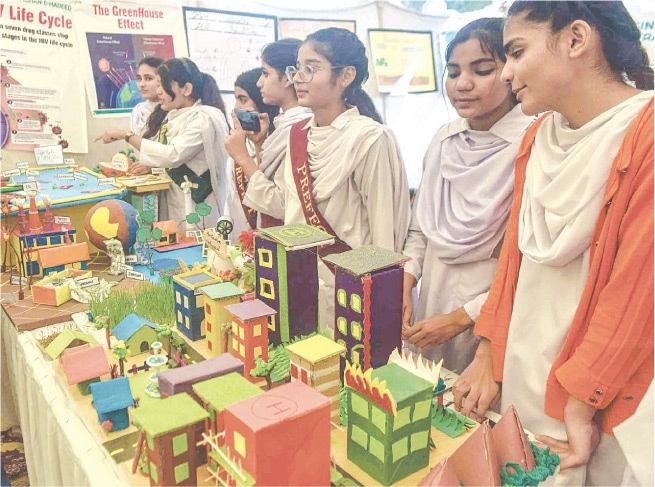
A student in a government school in Tharparkar constructs a model of a solar-powered irrigation system. Another in Umerkot experiments with water filtration, trying to find an affordable solution to a problem affecting the surrounding community. In a classroom in Kashmore, students explore robotics, while elsewhere in Sindh, young learners turn to artificial intelligence, literature, music and cultural heritage to express their ideas.
These are the kinds of possibilities that Sindh’s STREAM Journey 2026–27 seeks to bring within reach of students across the province. Under the theme “From Classrooms to Cosmos”, the initiative represents an effort to change not only what students learn but also how they engage with knowledge.
For years, conventional classroom education has placed considerable emphasis on textbooks, examinations and the memorisation of information. STREAM seeks to introduce a different approach: one in which students are encouraged to ask questions, investigate problems, conduct experiments, build models and discover how classroom concepts relate to the world around them. The programme, which began in 2024 under the broader vision of Science in Sindh, has developed into an ambitious provincial initiative. Its latest edition is expected to bring together approximately 200,000 students from government and private educational institutions, with a target of around 45,000 scientific models, creative projects and innovative ideas.
There is larger ambition behind STREAM. As the acronym brings together Science, Technology, Reading, Engineering, Arts and Mathematics disciplines that are often taught separately but are increasingly interconnected in modern education. Its underlying philosophy is that students should not merely acquire information; they should learn to use it, question it and develop something meaningful from it.
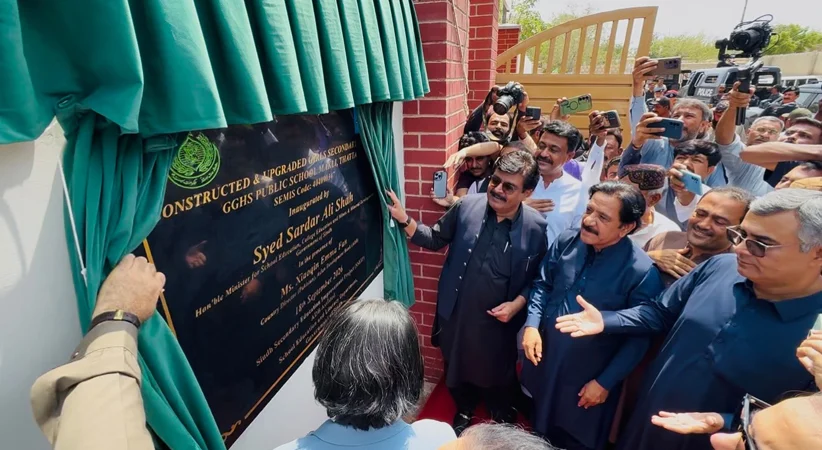
Education Minister Syed Sardar Ali Shah has placed this approach among the priorities of Sindh’s education agenda, with an emphasis on making scientific learning more accessible and encouraging students to develop ideas that respond to real-world challenges. The initiative is being pursued through collaboration among the School Education and Literacy Department, College Education Department, Sindh Education Foundation, Directorate General of Private Schools and participating non-formal education institutions and Madaris. By bringing these different educational systems together, the programme seeks to create a common platform on which students can demonstrate their abilities regardless of the institution they attend.
The five thematic areas reflect the breadth of this ambition. Climate resilience and green solutions form one of the central tracks, an especially relevant choice for a province that has experienced devastating floods, water shortages, rising temperatures and mounting pressure on its agricultural economy. Students are encouraged to explore water conservation, renewable energy, sustainable agriculture, recycling and environmental protection. A low-cost filtration device or a model demonstrating rainwater harvesting may appear modest, but such projects can introduce students to the relationship between scientific knowledge and community needs.
Another track focuses on artificial intelligence, digital applications and cybersecurity. As technology reshapes workplaces, communication and public services, familiarity with coding, automation and digital systems is becoming increasingly important. Introducing these concepts at school level can help students move from being passive users of technology to understanding how it works and how it can be applied.
Robotics, engineering and the Internet of Things provide another opportunity to translate theoretical knowledge into practical demonstrations. Students can construct automated irrigation systems, robotic devices, smart lighting and electronic security models. The value of such exercises lies not simply in the finished product but in the process of designing, assembling, testing and correcting it. Learning to identify an error and improve a model can be as valuable as producing a successful demonstration.
STREAM also makes room for disciplines that are sometimes overlooked in discussions about scientific innovation. Its arts, music, culture, heritage and literature track recognises that creativity is not confined to laboratories or computer screens. Sindh’s literary and cultural traditions, including the poetry of Shah Abdul Latif Bhittai, offer students a rich foundation for exploring storytelling, research, visual arts, music and cultural preservation. The inclusion of reading and artistic expression gives the initiative a broader educational character, recognising that communication and imagination are essential to intellectual development.
The natural and health sciences complete the five thematic areas, inviting students to investigate biology, chemistry, physics, biotechnology, applied mathematics and health-related subjects. Experiments and scientific models can introduce young learners to research methods while encouraging an early interest in medicine, engineering and scientific careers.
What distinguishes the 2026–27 programme from a conventional science exhibition is its progression through successive stages. Rather than bringing students together for a single event, STREAM provides a route from school-level participation to district, divisional and provincial competitions.
The registration and project-submission period runs from October 1 to November 15, 2026. Schools are expected to identify promising ideas and prepare project videos and supporting documentation. District-level festivals are scheduled across all 30 districts from November 21 to 30, followed by six divisional festivals from January 1 to 10, 2027. The journey will culminate in a provincial grand finale in Karachi during the last week of January.
This structure gives students an opportunity to develop their work and compete at progressively wider levels. A project that begins in a classroom in a remote district could eventually be presented before evaluators and audiences at the provincial exhibition. For many participants, the experience of representing their school, district and division may be as important as the recognition they receive.
The programme’s evaluation framework is another important component. Under a common assessment system known as the One Rubric, projects are judged against a standardised 100-mark framework. Originality, relevance to real-life problems, scientific and technical soundness, execution, craftsmanship, presentation, communication, teamwork, cost-effectiveness and recycling are among the areas considered.
Cross-entity juries at district, divisional and provincial levels are intended to ensure that projects are assessed against common standards. Such arrangements matter in a province where schools differ considerably in their resources and facilities. A student’s idea should be judged on its quality, ingenuity and execution, rather than the reputation or financial strength of the institution behind it.
Yet no science initiative can succeed without teachers. In STREAM, their role extends beyond delivering lessons or preparing students for examinations. They are expected to become mentors who encourage experimentation, guide research and help young people turn an initial idea into a workable project.
This shift also has implications for classroom teaching. A teacher explaining water pollution, for example, can encourage students to investigate local water sources, collect observations and examine possible solutions. A mathematics lesson can lead to an engineering model, while a discussion about climate change can become an exercise in data collection and environmental research. Such experiences make learning more meaningful because students encounter the practical relevance of what they study.
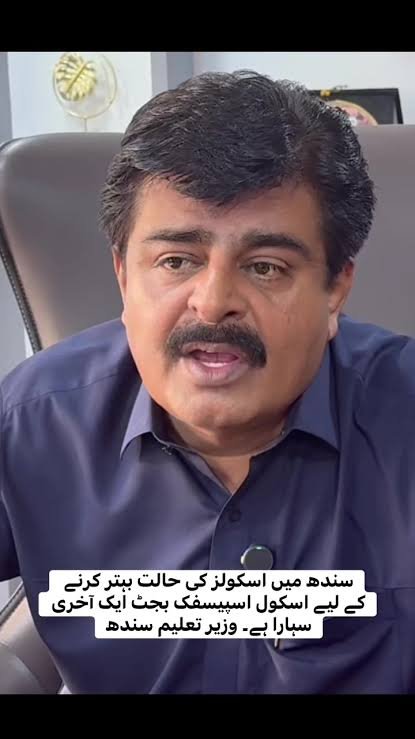
The programme also arrives at a time when Sindh’s government is pursuing wider changes in the education sector. The recruitment of more than 95,000 teachers over three years has expanded the teaching workforce, while the recruitment of more than 8,000 science teachers has been at the final stage. The School-Specific Budget, introduced for more than 34,000 schools in FY2025–26, is intended to strengthen school-level financial management. Digital initiatives, including FRAMES and the Student Attendance Monitoring and Redressal System, reflect the growing use of technology in monitoring and managing educational institutions.
The establishment of 276 STREAM laboratories, announced in the provincial budget framework, is particularly relevant to the programme’s emphasis on practical learning. Laboratories can provide students with opportunities to move beyond theoretical explanations and engage directly with scientific concepts. Their effectiveness, however, will depend on whether they are properly equipped, maintained and used regularly by trained teachers.
These measures illustrate why STREAM should not be viewed in isolation. A science festival can inspire students, but its influence will be limited unless schools have teachers capable of guiding experiments, facilities that support practical work and an institutional environment that encourages curiosity throughout the academic year.
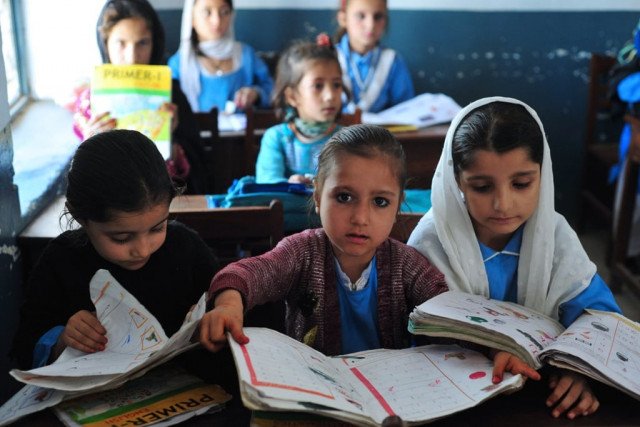
The initiative’s potential significance is perhaps greatest for students outside the province’s major urban centres. Educational opportunities have never been distributed evenly. Schools in larger cities may have better access to laboratories, technology and extracurricular activities, while students in remote communities often work with limited facilities. By bringing institutions from across Sindh into a common competition, STREAM creates an opportunity to recognise talent that might otherwise remain unnoticed.
Its inclusive participation framework, encompassing government and private schools, Sindh Education Foundation-supported institutions, colleges and participating Madaris, also challenges the idea that innovation belongs exclusively to elite educational establishments. A student does not need an expensive laboratory to demonstrate curiosity or originality. With appropriate guidance, even a simple model constructed from locally available materials can reveal an impressive understanding of a scientific problem.
Sindh’s students have already offered encouraging evidence of what can be achieved when such opportunities are provided. Government-school students recently secured first and third positions at a Science Festival in Islamabad, an achievement that deserves attention beyond the immediate recognition it brought to the province. It demonstrated that public-school students possess the ability to compete on wider platforms and challenge assumptions about the quality and potential of government education.
The promise of STREAM lies in its understanding that education must prepare children not only to answer questions set in examinations but also to confront questions that have no ready-made answers. It asks students to observe their surroundings, challenge assumptions and imagine better ways of doing things.
A child constructing a small scientific model in a village school today may become a researcher, engineer, doctor or innovator tomorrow. Such initiatives give young people the confidence and opportunity to explore their abilities can help set them on that path.
From classrooms in remote districts to a provincial exhibition in Karachi, STREAM 2026–27 offers Sindh an opportunity to make curiosity a more visible part of its education system. Its ultimate achievement will not be measured by the trophies displayed at the grand finale, but by the questions students continue to ask long after they return to their classrooms.
The writer is a former educationist and Editor in Chief of Daily Dusk.
X: @Inayatullah26


Leave a Reply