

By Inayatullah Rustamani
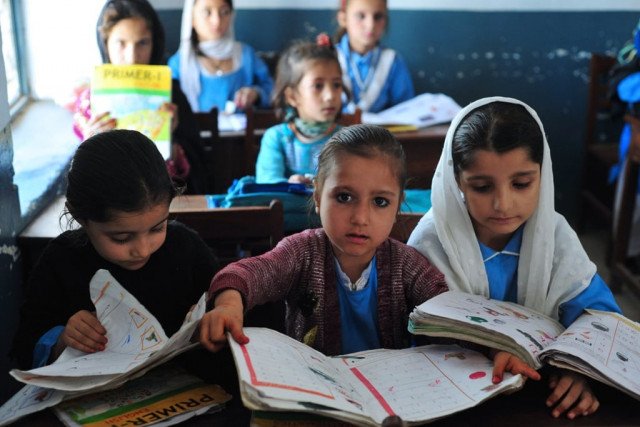
It is heartening to see the Sindh government moving towards another significant milestone in its efforts to expand educational opportunities across the province. With around 250,000 children expected to benefit from 838 newly constructed, upgraded and rehabilitated schools, Sindh is preparing to give a fresh impetus to school education and provide thousands of children with better opportunities to learn and progress.
Chief Minister Syed Murad Ali Shah has ordered a province-wide enrolment campaign to ensure that these schools become vibrant centres of learning from the very beginning. He has directed the School Education Department, district administrations and Education Management Organisations to identify children in the catchment areas and facilitate their enrolment when the schools become operational.
The initiative reflects an important understanding of education: investment in schools acquires its real value when classrooms are filled with children eager to learn. The Sindh government’s emphasis on enrolment therefore complements its substantial investment in educational infrastructure and aims to ensure that the benefits reach communities across the province.
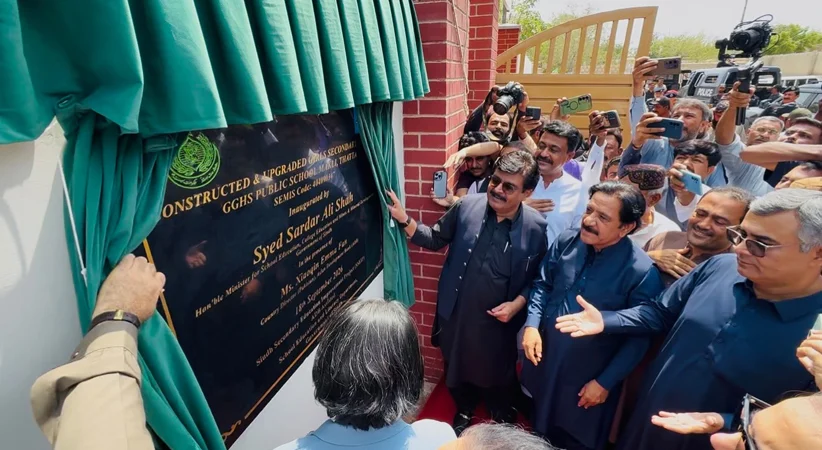
Education Minister Syed Sardar Ali Shah has highlighted the scale of the ongoing development under the Asian Development Bank-supported Sindh Secondary Education Improvement Project. A total of 838 schools are being constructed, upgraded or rehabilitated under the programme, including 116 new secondary schools and 722 climate-resilient schools being reconstructed under the flood rehabilitation component.
The figures underline the breadth of the initiative. These projects are expected to create educational opportunities for nearly 250,000 children, including more than 221,000 students in flood-affected districts and over 28,000 students in newly upgraded secondary schools.
For children and families in communities where schools are being rebuilt, these developments carry special significance. A modern school can become a focal point for education and community development, giving children access to classrooms and facilities designed to support their learning. The reconstruction of climate-resilient schools also represents an effort to provide stronger and more sustainable educational infrastructure in areas affected by the floods.
The enrolment campaign will bring together government departments, local representatives, community leaders, school management committees, parents, community organisations and EMOs. This broad participation can help ensure that the new educational opportunities reach families and that children living around these schools become part of the education system.
The government has also placed particular emphasis on girls’ education. The new schools are being equipped with facilities including science and computer laboratories, digital libraries, solar power systems and common rooms for girls. These facilities can contribute to creating a modern and supportive learning environment for students.
The emphasis on practical learning is particularly encouraging. Science laboratories can give students opportunities to understand scientific concepts through practical work, while computer laboratories can introduce them to digital skills increasingly important in higher education and professional life. Digital libraries can further broaden access to learning resources.
Solar power systems are another important feature of the new schools. Reliable electricity can support computer laboratories, digital learning and other educational activities while helping schools provide a more functional environment for students.
The progress of the school construction programme also provides a clear timeline for the enrolment campaign. According to the briefing presented to the chief minister, 257 schools are scheduled for completion by December 2026, while the cumulative number is expected to reach 611 by June 2027. The remaining schools are targeted for completion by the end of 2027.
Of the 116 schools under the original SSEIP project, 64 secondary schools are expected to be completed by December 2026 and the remaining 52 by June 2027.
The government has also directed the School Education Department to establish measurable targets for enrolment, retention and learning outcomes and prepare operational plans for individual schools before their completion. Such planning can help ensure that the newly developed institutions begin their academic journey in an organised manner.
What is particularly noteworthy is that these developments are taking place on the ground, in the form of actual school buildings, laboratories, libraries and other facilities. At a time when education is sometimes discussed through social-media posts, photographs and videos, it is important that public debate remains connected to verifiable facts and developments.
There is a tendency on social media for old photographs, images from other places or misleading videos to be presented as representations of the current situation in Sindh’s education sector. Such content can create confusion and obscure genuine developments. The most meaningful response to misinformation, however, is not another claim but transparent, verifiable evidence.
And the evidence of development is increasingly visible in the form of schools being constructed, upgraded and rehabilitated across the province.
For those who follow education only through isolated social-media images, the scale of this programme may be easy to miss. A photograph can capture a single moment; it cannot necessarily capture an entire provincial education programme. The construction of 838 schools and the planned creation of opportunities for around 250,000 children provide a much broader picture of the investment being made in education.
The role of Education Minister Syed Sardar Ali Shah is central to this continuing focus on school development. Under his portfolio, the education department is overseeing projects aimed at improving infrastructure, expanding access and providing students with facilities that reflect the requirements of contemporary education.
The wider vision is equally important. The Sindh government is not simply adding buildings to its school network; it is seeking to create educational environments where children can study, develop practical and digital skills and prepare themselves for the future.
Behind every statistic is a child. For one child, a new school may mean the opportunity to study science in a proper laboratory. For another, it may be the first experience of using a computer. For a girl, a modern secondary school close to her community may provide an opportunity to continue her education. For thousands of parents, it may mean seeing their children receive opportunities that were previously beyond their reach.
This is what gives meaning to the Sindh government’s education initiatives. A school building becomes truly valuable when its classrooms are filled, its laboratories are being used, its library is being read and its teachers are helping students discover their abilities. With 838 schools moving towards completion and an enrolment campaign aimed at bringing around 250,000 children into classrooms, Sindh is creating an important new chapter in its education journey.
The development deserves to be assessed through facts, functioning schools and the opportunities created for children — not through isolated or misleading images circulating online. The ultimate picture is a simple one: new schools, better facilities and more children walking through their doors.
For Sindh’s children, those doors can open not merely into classrooms, but towards knowledge, confidence and a future filled with greater possibilities.
The writer is a former educationist and a columnist .
X: @inayatullah26




Leave a Reply