

By Inaytullah Rustamani
The Sindh Education Department has embarked on one of the most ambitious and transformative education reforms in the province’s history through the introduction of the School Specific Budget (SSB). What initially appeared to be a bold experiment has rapidly evolved into a promising model of decentralized school governance, financial transparency, and institutional empowerment.
During the Financial Year 2025-26, the Government of Sindh, under the leadership of the Minister for Education, Syed Sardar Ali Shah , allocated and released a historic Rs 18.63 billion for the repair, renovation, maintenance, furniture, and other essential needs of government schools across the province. What made this initiative truly unique was that the funds were transferred directly to school heads, giving them the authority to address the specific needs of their institutions without the traditional layers of administrative intervention.
For the first time in Sindh’s educational history, school heads became the primary decision-makers regarding the utilization of development funds. This marked a significant shift from centralized financial control to a school-based management system, recognizing that those who understand a school’s needs best are the people who manage it every day.
As expected, the initiative faced criticism from some quarters. Critics questioned the wisdom of entrusting school heads with such large sums of public money, while others predicted that the programme would fail. Certain vested interests, accustomed to the old centralized system, also opposed the reform. However, the developments witnessed over the past several months have presented a different picture.
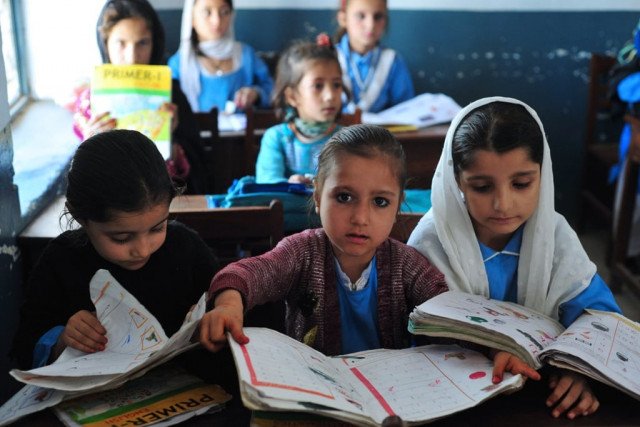
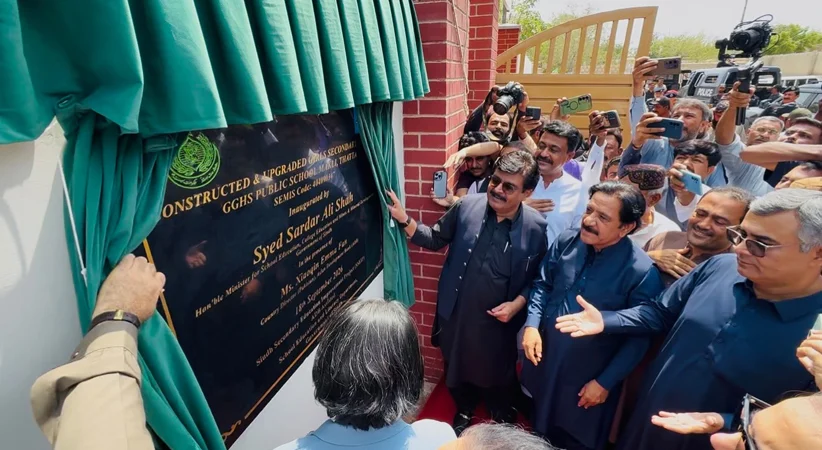
Across Sindh, photographs and reports shared on social media and other public platforms show hundreds of schools that have undergone repairs, renovations, classroom improvements, furniture replacement, boundary wall reconstruction, sanitation upgrades, and other infrastructure enhancements. These visible improvements suggest that many school heads have utilized the allocated funds responsibly and effectively to improve learning environments for students.
The government’s confidence in the programme is reflected in its decision to increase the School Specific Budget to Rs 22 billion for the Financial Year 2026-27. This substantial increase demonstrates that the initiative has gained the trust of policymakers and is now considered a cornerstone of Sindh’s education reform agenda.
Today, Sindh stands out as the only province in Pakistan to allocate such a significant amount directly to schools under a decentralized budgeting model. This pioneering approach has the potential to inspire similar reforms in other provinces seeking to improve educational infrastructure and school governance.
It is also important to acknowledge that implementing such a large-scale reform has not been without challenges. Delays in fund disbursement at district treasuries, procedural hurdles, and resistance from certain quarters slowed implementation in some areas. Nevertheless, despite these obstacles and the relatively short time since its launch, the programme has continued to make encouraging progress.
The success of the School Specific Budget lies not only in the amount of money allocated but also in the philosophy behind it—trusting school leaders, promoting accountability, decentralizing decision-making, and ensuring that financial resources reach the schools where they are needed most. When principals are empowered with both authority and responsibility, they become active agents of change rather than passive recipients of administrative decisions.
If transparency, monitoring, and community participation continue to accompany this initiative, the School Specific Budget can become a sustainable model for educational development. Better classrooms, improved facilities, enhanced learning environments, and stronger school leadership will ultimately benefit millions of students across Sindh.
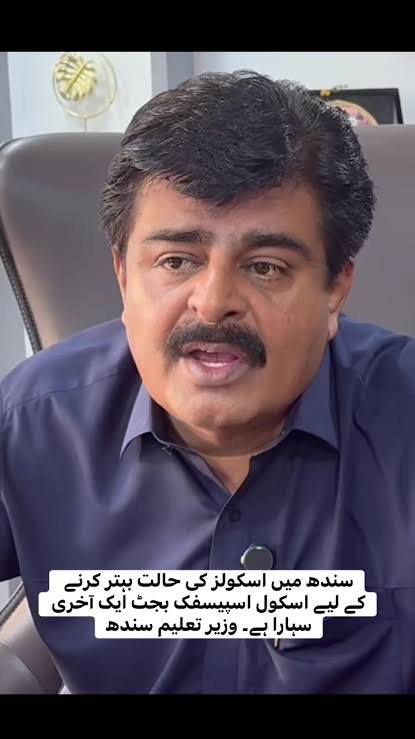
The Minister for Sindh Education , Syed Sardar Ali Shah, rightly said that the School Specific Budget is the only hope for a big change in education in Sindh, as this budget is more than a financial program ; it is a transformational reform. Its early achievements indicate that it has the potential to redefine public education in Sindh. With commitment and accountability, this initiative may well be remembered as one of the most significant milestones in the history of education reforms in the province.
The writer is a freelancer and a former educationist.


Leave a Reply