

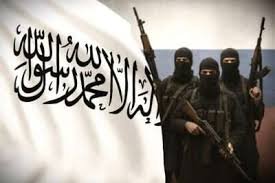
KABUL — Russia’s Foreign Ministry has warned that Afghanistan is home to between 20,000 and 23,000 active terrorist fighters, with more than half of them foreign nationals, raising concerns about regional security and the spread of extremist activity.
The report details the presence of several international terrorist groups operating across Afghanistan. Among them, the Islamic State’s Khorasan branch (ISIS-K) counts roughly 3,000 fighters, while the Tehreek-e-Taliban Pakistan (TTP) numbers between 5,000 and 7,000 members. Al-Qaeda’s presence ranges from 400 to 1,500 militants, the Islamic Movement of East Turkestan (ETIM) between 300 and 1,200, the Islamic Party of Turkestan (formerly IMU) 150 to 500, and Jamaat Ansarullah around 150 to 250 fighters.
The TTP, primarily concentrated in Afghanistan’s southeast and eastern regions, continues to target Pakistan, further straining relations between the neighboring countries. ISIS-K, meanwhile, has established training camps and sleeper cells across several Afghan provinces. While it does not currently threaten the Taliban-led government directly, its attacks are aimed at undermining public confidence in Kabul’s ability to maintain security.
The group has launched attacks in the east, north, and northeast, and reportedly seeks to expand into Central Asia to establish a new caliphate. Afghan security forces have reportedly dismantled small cells, seized weapons caches, and removed extremists from educational and state institutions. Despite these efforts, high-profile attacks have continued into 2025 and 2026, including assaults on religious scholars in Baghlan, the killing of a Chinese citizen in Takhar, and a bombing in Kunduz.
Al-Qaeda remains entrenched in provinces such as Ghazni, Laghman, Kunar, Nangarhar, Nuristan, Parwan, and Urozgan, leveraging Afghanistan as a base to extend its regional influence through alliances with other extremist groups.
The report also highlighted the limited capacity of Afghan armed opposition groups, including the National Resistance Front and Afghanistan Freedom Front, which have carried out sporadic raids mostly in Panjshir, Badakhshan, and Baghlan.
In addition to terrorism, Russia’s report underscores Afghanistan’s ongoing role as a major producer of narcotics. Although Taliban efforts reportedly reduced poppy cultivation by 20% in 2025, methamphetamine production surged. Smuggling of synthetic drugs, particularly methamphetamine, rose by 50% from 2023 to 2024, indicating continued challenges for both domestic and regional law enforcement.
The Russian Foreign Ministry’s report paints a complex picture of Afghanistan as a hub for terrorism and drug trafficking, emphasizing the persistent threat posed by foreign fighters and transnational criminal networks.


Leave a Reply