
Feb. 26, 2026 | Islamabad/Geneva
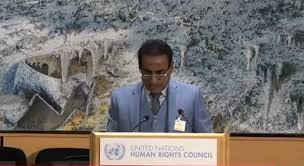
Pakistan on Thursday warned of what it called a growing wave of Islamophobia in global political discourse and spotlighted the humanitarian crisis in Palestine during remarks at the 61st session of the United Nations Human Rights Council, urging stronger multilateral action to safeguard fundamental rights.
Addressing the council in Geneva, Abdul Khalique Shaikh, secretary of Pakistan’s Ministry of Human Rights, said rising prejudice against Muslims and escalating violence in conflict zones were eroding international human rights protections at a time of mounting global instability.
He cautioned against what he described as the “growing trend of Islamophobia as a tool for prejudice against Muslims,” calling on the international community to confront discrimination, hatred and systemic inequalities.
Pakistan is currently serving as an elected member of the Human Rights Council and has sought to position itself as an advocate of civilian protection and multilateral cooperation amid wars and humanitarian crises in several regions.
Focus on Palestine
In his remarks, Shaikh highlighted what he termed a grave humanitarian situation in Palestine, warning that continued violence and impunity were destabilizing the region and diminishing prospects for a durable peace.
Islamabad has repeatedly raised concerns at U.N. forums over developments in Palestinian territories, linking the issue to broader principles of international law and self-determination.
Afghanistan and Women’s Rights
Shaikh also addressed the situation in Afghanistan, saying religion must not be invoked to justify curbs on women’s rights.
“Islam must not be misused to justify the suppression of women’s rights,” he said, in an apparent reference to restrictions imposed on women and girls by the Afghan Taliban authorities.
Pakistan has maintained that stability in neighboring Afghanistan is critical for regional security, while also urging the protection of fundamental freedoms.
Kashmir and Self-Determination
Reiterating Pakistan’s long-standing position on Indian-administered Jammu and Kashmir, Shaikh said the right to self-determination “is not for sale,” referring to U.N. Security Council resolutions on the disputed territory.
Pakistan has frequently raised Kashmir at international forums, framing it as a question of human rights and international commitments.
Shaikh concluded by saying Pakistan remained committed to dialogue and universal respect for human rights in line with the principles of the United Nations Charter, calling for renewed collective resolve in what he described as an increasingly polarized global environment.



Leave a Reply