

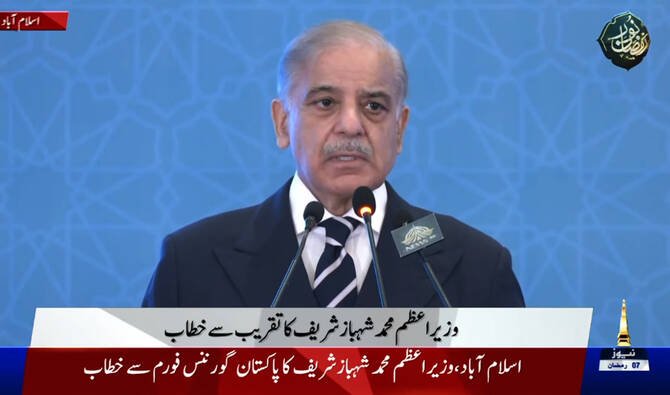
Shehbaz Sharif says relief for businesses planned in next budget as government prepares for key fund assessment
Pakistan’s prime minister, Shehbaz Sharif, has signalled broad-based reductions in direct taxes in the upcoming federal budget, framing the move as a step to support investors and stimulate growth as the country approaches a crucial review of its $7bn bailout programme with the International Monetary Fund.
Speaking at the Pakistan Governance Forum 2026 in Islamabad on Wednesday, Sharif said the government was considering lowering direct taxes “across the board” in the next few months to ease pressure on businesses.
“We will need to reduce direct taxes so that business investors get some relief and they know that their capital is not being eaten up by taxes,” he told participants at the high-level policy dialogue.
Pakistan is implementing fiscal consolidation measures under an IMF Extended Fund Facility agreed last year. The programme requires structural tax reforms aimed at widening the base, improving transparency and boosting revenue collection.
An IMF staff mission is expected in Islamabad this week for the third review of the bailout package, alongside a second review under a climate resilience facility. The outcome will determine the release of further tranches and is widely seen as vital for sustaining market confidence and external financing flows.
Sharif acknowledged that Pakistan was operating under IMF conditionalities but argued that many of the lender’s demands were aligned with reforms the country needed to undertake regardless.
Call for compliance on indirect taxes
While advocating relief on direct taxation, Sharif issued a pointed warning to businesses over the handling of indirect taxes, which are collected from consumers at the point of sale.
“You collect indirect taxes from the consumer, but if you take that indirect tax and put it in your pocket, how is that any different from exploiting the larger public?” he said, stressing that such revenues must be deposited fully into the national exchequer.
Pakistan’s tax structure has long been criticised for relying heavily on indirect levies, which disproportionately affect lower-income households. Economists argue that a shift towards more efficient direct taxation, alongside better compliance, is essential for sustainable fiscal reform.
‘Uraan Pakistan’ push
Sharif also urged provincial governments to actively participate in the federal administration’s “Uraan Pakistan” initiative, a development framework aimed at accelerating growth, increasing exports and strengthening governance coordination across the country.
He cited improvements in macroeconomic indicators in recent months, including stabilisation of inflation and foreign exchange reserves, but emphasised that deeper structural reforms were needed to secure long-term resilience.
The coming budget — expected before the end of the fiscal year — will be closely watched by investors and the IMF alike, as Pakistan seeks to balance fiscal discipline with political and economic pressures to deliver relief to businesses and households.




Leave a Reply