

Feb. 26, 2026 | Peshawar
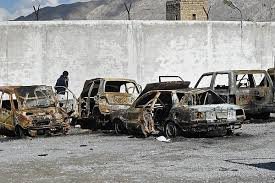
A wave of coordinated militant attacks across northwest Pakistan over the past 48 hours has left nearly 20 people dead, including 15 police personnel and four civilians, according to local officials, highlighting the persistent security challenges in the country’s border regions.
The incidents come amid rising tensions along the porous Pakistan-Afghanistan frontier, where both countries recently exchanged fire, each blaming the other for escalating hostilities. Two police officers were also reported kidnapped during the attacks and remain missing, police said.
“Over the past 48 hours, 15 police personnel and four civilians have been killed in terrorist incidents across various parts of Khyber Pakhtunkhwa,” said a senior provincial police official based in Peshawar.
Most of the attacks were claimed by the Tehreek-e-Taliban Pakistan (TTP), which has intensified operations in Pakistan since the return of the Afghan Taliban to power in Kabul in 2021. The TTP has frequently targeted security forces in Khyber Pakhtunkhwa and neighboring Balochistan with roadside bombings, ambushes, and raids, raising concerns over the region’s stability.
In response, Pakistan’s military said it killed 26 militants in four separate counterterror operations in the affected areas. The army has repeatedly conducted cross-border strikes in Afghanistan, targeting what it calls TTP and other militant hideouts, citing the group’s use of Afghan soil as a staging ground for attacks. Kabul has denied these allegations, and the strikes have fueled diplomatic tensions between the neighboring countries.
Security experts say the spike in violence underscores the complex challenges facing Pakistan in stabilizing its northwest regions. “The TTP has shown resilience despite years of military operations,” said a Karachi-based analyst specializing in counterterrorism. “The porous border and local sympathizers make containment extremely difficult.”
The attacks also come at a time when Pakistan is balancing domestic security concerns with broader geopolitical pressures, including ongoing economic reforms, engagement with the International Monetary Fund, and rising regional security risks linked to Afghanistan and India-Israel relations.
Authorities in Khyber Pakhtunkhwa have urged residents to exercise caution and remain vigilant, while security forces have intensified patrols and checkpoints across the region.
“These attacks are a reminder that threats remain real and persistent,” said the provincial police official. “We continue to pursue the militants vigorously and are committed to ensuring public safety.”
The surge in violence has raised concerns among humanitarian organizations and international observers, particularly given the potential for civilian casualties and the disruption of everyday life in a region already grappling with economic and climatic challenges.











Leave a Reply