

Feb. 26, 2026 | Hyderabad, Pakistan
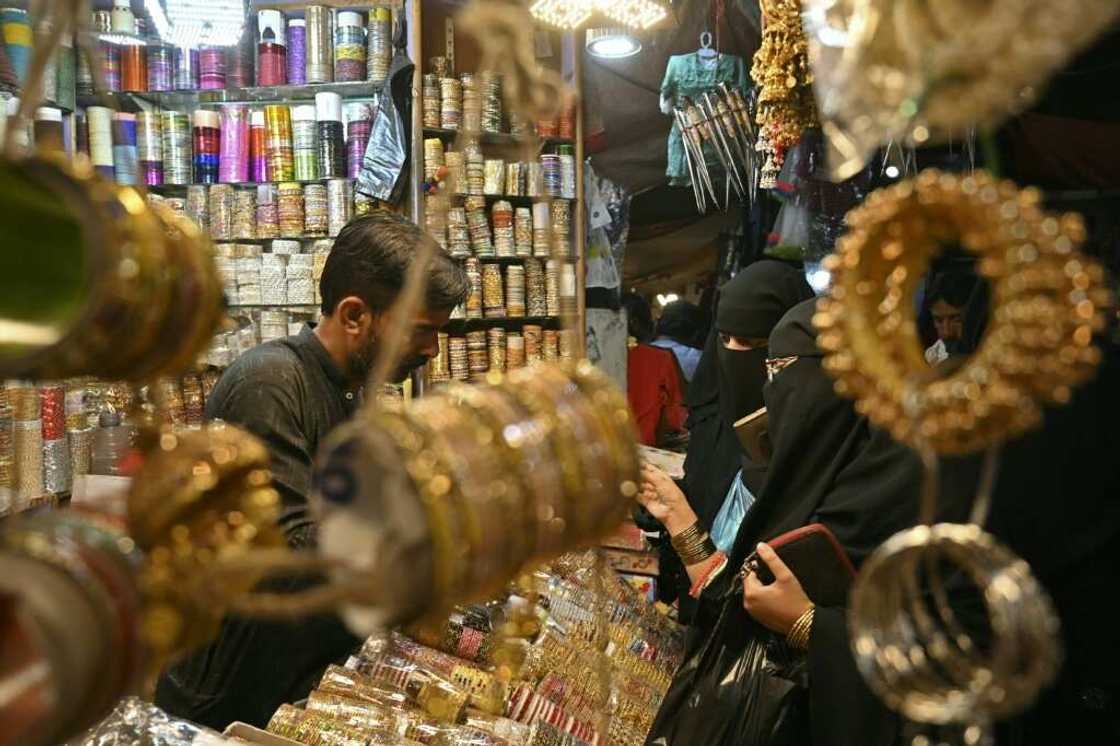
In a narrow workshop tucked inside Hyderabad’s historic Choori Gali, 50-year-old Farmida Khalid leans over a small oil flame, deftly sealing the ends of delicate glass bangles. Working alongside her children in stifling heat, she helps produce nearly 3,000 bangles a day — ornaments that for generations have symbolized celebration in the final days of Ramadan.
But this year, the usual pre-Eid rush has been subdued.
Manufacturers in Hyderabad, Pakistan’s largest hub for glass bangles, say soaring gas prices and rising taxes have slashed production, inflated retail costs and put as many as 200,000 jobs at risk in an industry long sustained by seasonal festive demand.
“Gas is the most important utility for bangle production, and its cost has become extremely high,” said Muhammad Saleem Khan, president of the Hyderabad Glass Bangle Manufacturers Association.
According to Khan, gas tariffs have risen by 92 percent in the past two years, reaching Rs2,300 ($8.20) per million British Thermal Units. The increase follows subsidy cuts tied to Pakistan’s $7 billion stabilization program with the International Monetary Fund, which has pressed Islamabad to reduce energy support and broaden its tax base.
On top of higher fuel costs, manufacturers face an 18 percent general sales tax and an additional 4 percent levy applied to unregistered wholesalers — effectively raising the total tax burden to 22 percent.
The combined impact has sharply increased prices for consumers. “Gas that once allowed us to produce bangles costing Rs50 now results in products sold at Rs500 in the market,” Khan said. More intricate designs can fetch Rs1,000 to Rs2,000 per set — a steep price in a country where household budgets remain strained despite easing inflation.
Operating at Half Capacity
The glass bangle industry in Hyderabad is valued at an estimated Rs10 billion (about $36 million) and supplies markets across Pakistan, as well as exports to Afghanistan, Bangladesh, Nepal and parts of the Gulf. Yet factory owners say they are operating at roughly 50 percent capacity.
Traditionally, the Islamic months of Shaban and Ramadan marked peak production, with furnaces burning late into the night and workshops humming at around 70 percent capacity. This year, Khan said, output has fallen closer to 30 percent, citing high input costs and disruptions in cross-border trade with Afghanistan.
In Choori Gali, once crowded with the clang of glass and the glow of furnaces, some workshops now stand shuttered.
At the worker level, the slowdown means fewer shifts and unpredictable wages. Islam Din, 30, who works 12-hour shifts at Al Naeem Glass Works, said factory operations are often suspended for weeks. “Of course, we have problems,” he said. “But we are somehow surviving. We don’t have any other business.”
For women like Khalid, whose families have worked in the trade for generations, the craft is more than a livelihood — it is an inheritance. Yet rising production costs and falling demand are eroding that legacy.
Changing Consumer Habits
Rising prices have also altered buying patterns. Although Pakistan’s inflation rate has retreated from its 2023 peak of 38 percent, purchasing power remains fragile.
“Cheaper metal bangles have taken over more than 50 percent of the market across Pakistan,” Khan said. Unlike traditional glass sets, metal alternatives are more durable and less costly to produce, making them attractive to price-conscious shoppers.
Wholesalers report a sharp drop in order volumes. “Now, our orders look like 500, 700, 300 boxes,” said Muhammad Imran Shaikh, recalling that monthly orders once exceeded 2,000 boxes during the Ramadan season.
Industry leaders are urging the government to reduce gas tariffs by at least 35 percent, to Rs1,500 per MMBTU, and ease the tax burden to prevent further closures.
“If relief is not provided, it will gradually close down,” Khan warned.
For now, in Hyderabad’s dim workshops, the flames still burn — but more faintly than before, casting uncertainty over a craft that has long lit up Pakistan’s festive nights.





Leave a Reply