


In a small village near the banks of the Indus River, where the evening breeze carried the scent of wet soil and wood smoke, there lived a woman named Zainab. She was known not for her wealth or status, but for her kitchen. People said her hands carried magic; whatever she cooked tasted like home.
Zainab often said, “Food does not ask who you are. It only asks if you are hungry.”
One summer, when the sun burned fiercely and the river shrank into narrow streams, a group of travelers arrived in the village. They were strangers — different languages, different clothes, different customs. Some were traders, some were students, and one was a journalist writing stories about forgotten towns.
The villagers were cautious. Strangers brought curiosity, but sometimes they also brought trouble. The travelers, tired and dusty, sat beneath the old banyan tree in the center of the village. Their eyes wandered toward the mud houses and narrow streets, uncertain and silent.
Zainab watched from her doorway.
Without asking anyone’s opinion, she tied her scarf firmly and stepped into her kitchen. She lit the clay stove, kneaded the dough, chopped onions and green chilies, and stirred lentils in a large pot. Soon, the aroma of spices filled the air — turmeric glowing golden, cumin crackling in oil, garlic releasing its warmth. She prepared simple food: fresh rotis, steaming daal, and cool yogurt from her clay pot.
Carrying large trays, she walked to the banyan tree and placed them before the travelers.
“Eat,” she said with a gentle smile. “The road is long.”
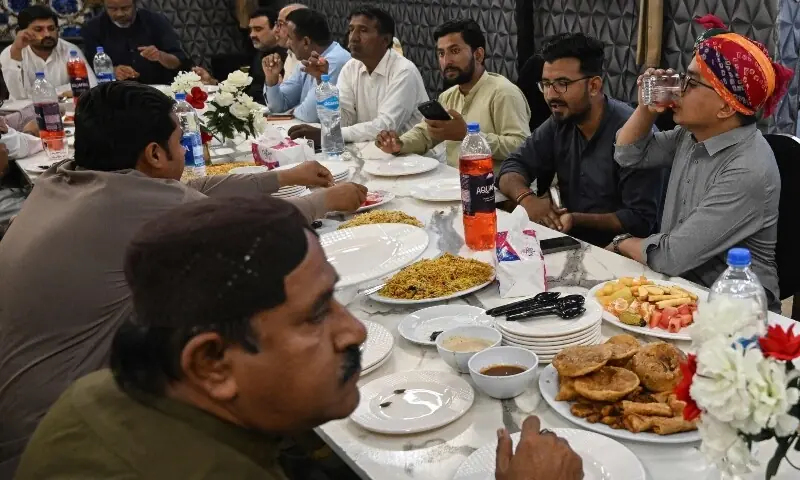
At first, there was hesitation. They did not share a common language. But hunger speaks clearly. One by one, they reached for the bread, dipping it into the lentils. The journalist’s eyes widened. A trader nodded appreciatively. The youngest traveler whispered something that needed no translation: “Delicious.”
Soon, villagers gathered around. Someone brought sweet tea. Another added mangoes from his orchard. Children giggled as they tried to repeat words from the travelers’ language. Laughter replaced suspicion. Questions replaced silence.
As the sun began to set, the banyan tree became a small world of its own. Stories were exchanged — of distant cities, of mountains and seas, of dreams and struggles. The journalist spoke about his hometown where people broke fast together during Ramadan. A trader described winter soups from his cold homeland. Zainab listened carefully, realizing that though recipes differed, the warmth they carried was the same.
One traveler, an elderly man with silver hair, pointed at the daal and said slowly, “In my country, we cook something like this too. Different spices, same comfort.”
Zainab smiled. “Then we are not strangers.”
That evening, something invisible yet powerful happened. Barriers dissolved, not through speeches or agreements, but through shared bites of bread and lentils. No one discussed politics. No one debated beliefs. They spoke of mothers’ kitchens, of childhood meals, of festivals where families gathered around a single table.
Food had done what words alone could not.
Before leaving the next morning, the journalist handed Zainab a small notebook. Inside, he had written a sentence: Food is our common ground, a universal experience.
Years later, the village changed. New roads were built. Mobile phones replaced letters. Some villagers moved to cities. But under the banyan tree, people still remembered the day strangers became friends over a simple meal.
Zainab grew older, her hair turning silver like the elderly traveler’s. Yet her stove still burned every evening. Whenever newcomers arrived, she repeated her ritual — knead, stir, serve.
Because she understood something profound: before we belong to nations, languages, or religions, we belong to hunger and hope. We belong to the simple human need to sit together and eat.
And in that shared act — passing bread, pouring tea, tasting unfamiliar spices — we rediscover what we often forget:
We are different in many ways, but at the table, we are the same.
Food is not just nourishment for the body; it is nourishment for the heart. It turns strangers into neighbors, suspicion into trust, and silence into conversation.
Under the shade of that old banyan tree, in a small village by the river, the truth quietly lived on every day — that food is indeed our common ground, a universal experience.















Leave a Reply