

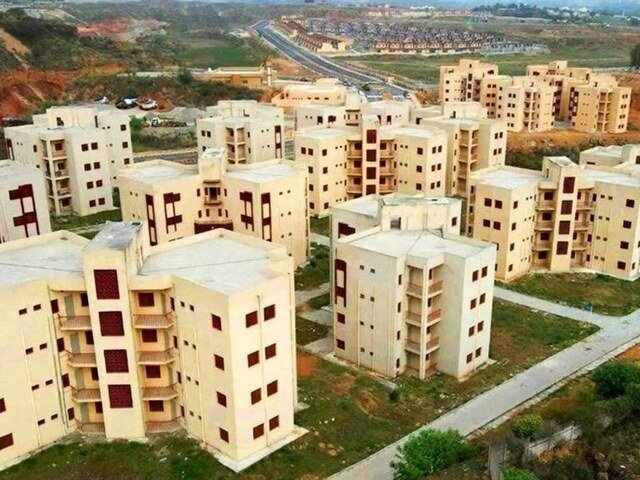
KARACHI, Feb. 27, 2026 — Pakistan’s top economic decision-making body has approved sweeping revisions to a government-backed low-cost housing finance program, increasing the maximum loan size to Rs10 million ($35,714) and introducing a subsidized five percent interest rate in an effort to expand access to home ownership.
The decision was taken Thursday by the Economic Coordination Committee (ECC) of the Cabinet, which reviewed a proposal from the Ministry of Housing and Works to modify the “Mera Ghar Mera Aashiana” mortgage financing scheme.
In a statement, the Finance Division said the ECC approved “enhancement of the loan limit up to PKR 10 million, expansion of eligible housing size parameters, introduction of a uniform 5 percent end-user pricing, scaling targets for housing finance over a four-year horizon, continuation of implementation through the State Bank of Pakistan mechanism, and adjustment of already disbursed loans to the revised 5 percent rate to ensure uniformity.”
The revised structure also aligns subsidy payments with actual loan disbursements and stipulates that fiscal support will be accommodated within annual budgetary allocations.
Addressing a widening housing gap
Pakistan faces a persistent and widening housing deficit, fueled by rapid urbanization, population growth and escalating construction costs. Government estimates have placed the shortfall in the millions of units, with low- and middle-income households particularly constrained by limited access to formal mortgage financing.
Under the revamped scheme, the government aims to reduce borrowing costs for first-time and lower-income buyers while encouraging banks to expand their housing portfolios through a risk-sharing and mark-up subsidy framework.
The introduction of a uniform five percent end-user rate is designed to provide predictability for borrowers, while the higher loan ceiling reflects rising property prices and construction expenses in major cities.
Economic stimulus component
Officials say the revised program is intended not only to facilitate home ownership but also to stimulate construction activity and generate employment in allied sectors such as cement, steel and services.
The ECC, a key federal forum that vets major financial and economic proposals before formal cabinet approval, has in recent years prioritized housing finance as part of broader efforts to deepen Pakistan’s relatively underdeveloped mortgage market.
Analysts note that while subsidized schemes can improve affordability in the short term, their long-term sustainability will depend on fiscal discipline, banking sector participation and broader macroeconomic stability.
For now, the government is betting that easier access to credit at a fixed five percent rate will help bring formal housing finance within reach of a wider segment of Pakistan’s population — and chip away at a housing shortage that has long outpaced supply.



















Leave a Reply