

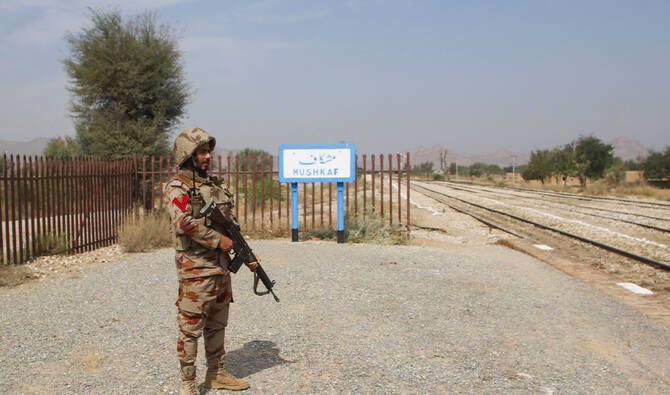
ISLAMABAD — Pakistani security forces killed five suspected militants, including a suicide bomber, during an intelligence-based operation in Balochistan’s Pishin district, the military said Monday, as authorities pressed ahead with an intensified counterterrorism campaign in the country’s southwest.
In a statement, the military’s media wing, Inter-Services Public Relations, said troops engaged a militant formation armed with multiple weapons. After what it described as an intense exchange of fire, one suspected suicide bomber detonated himself while four other militants were shot dead.
Weapons, ammunition and explosives were recovered from the site, the statement said, adding that the group had been involved in several attacks in the area.
A spokesman for Balochistan’s Counter-Terrorism Department confirmed the operation earlier, saying the militants had planned to target police lines and Cadet College Pishin.
The operation comes amid a broader security push under the banner of “Azm-i-Istehkam,” a campaign approved by the federal apex committee on the National Action Plan to counter militancy. The military said follow-up “sanitization operations” were underway to clear the area of any remaining suspects.
President Asif Ali Zardari and Prime Minister Shehbaz Sharif praised the security forces in separate statements carried by state-run media, commending what they described as continued progress against militant groups.
The latest raid follows a series of operations in the province. Last week, officials said 14 suspected militants were killed in separate actions in Quetta and Barkhan districts. Earlier this month, the military announced the conclusion of “Operation Radd-ul-Fitna-1,” a dayslong campaign in which it said 216 militants were killed after coordinated attacks across Balochistan on Jan. 31 disrupted normal life in parts of the province.
Balochistan and neighboring Khyber Pakhtunkhwa have seen a resurgence of violence in recent months, prompting authorities to expand security operations even as concerns persist over the durability of long-term stability in the restive region.





















Leave a Reply