

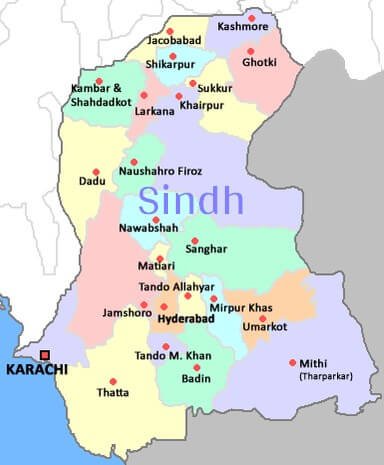
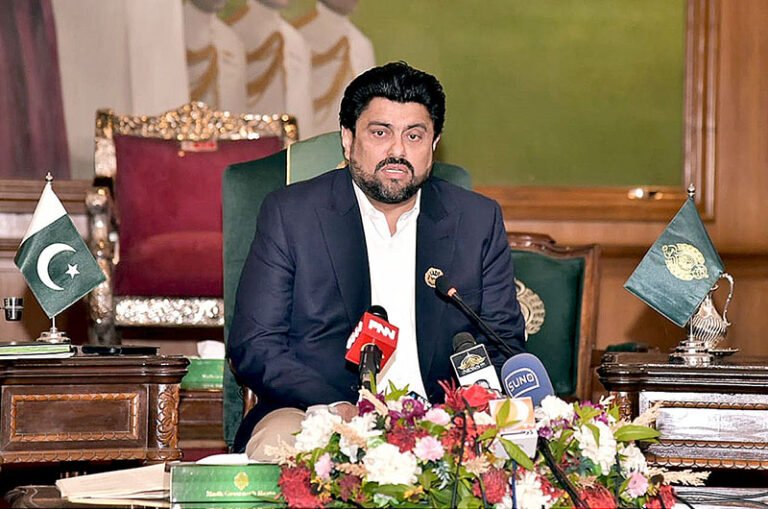
On February 21, 2026, the Sindh Assembly unanimously passed a resolution reaffirming that Karachi, the economic heart of Pakistan, is an integral and inseparable part of Sindh. Presented by Chief Minister Syed Murad Ali Shah, the resolution came in response to renewed political calls for federal control over Karachi and suggestions of dividing the province. Murad Ali Shah emphasized that any attempt to separate Karachi or alter Sindh’s territorial integrity is contrary to the Constitution, history, and public interest.
The resolution reflects not only the current political consensus but also Sindh’s historical and cultural identity. Sindh, often referred to as the cradle of the Indus Valley Civilization, has a rich history of resilience, culture, and governance that predates modern Pakistan. From the era of the mighty Indus cities of Mohenjo-daro and Harappa to the rule of the Samma dynasty, Soomra dynasty, and later under British colonial administration, Sindh has consistently maintained a distinct administrative and cultural identity. Even after its incorporation into Pakistan in 1947, the province retained its linguistic, cultural, and territorial distinctiveness, as enshrined in Articles 140-A and 239(4) of the Constitution, which safeguard provincial integrity and empower local governments.
Yet, despite these constitutional and historical safeguards, the Muttahida Qaumi Movement–Pakistan (MQM-P) recently held a press conference challenging the resolution, labeling it “unconstitutional.” The party’s claims are not only legally unfounded but also politically motivated.
The resolution passed by the Sindh Assembly merely reaffirms existing constitutional provisions and historical facts—it does not seek to curtail federal powers nor undermine democratic governance. On the contrary, it asserts that no unilateral political maneuver should disrupt Sindh’s unity.
Karachi, as Pakistan’s largest city and economic hub, has always been the focal point of national and provincial politics. Its rapid urbanization, massive contribution to the national economy, and diverse demography make it a critical part of Sindh. Throughout history, attempts to isolate Karachi politically or economically have not succeeded, and today’s resolution ensures that any future attempts to fragment the province are firmly rejected.
Sindh’s historical experience shows that divisions based on language or ethnicity often weaken governance and fuel instability, as seen in past political movements that attempted to manipulate Karachi’s status for partisan gains.
The resolution also serves as a reminder that national cohesion requires respect for provincial boundaries and historical identity. Pakistan’s strength lies in its diversity, and Sindh’s integration within the federation has been a cornerstone of this balance. Any attempt to manipulate Karachi’s status for political leverage undermines this balance and risks stirring tensions in an already politically sensitive city.
In conclusion, the Sindh Assembly’s resolution is not only constitutional but also historically and politically justified. It safeguards the unity of Sindh.




Leave a Reply